Italian Craftsmanship: The Enduring Mastery Behind Timeless Making
How centuries of tradition shape the way Italian artisans approach quality, precision, and durability in 2026.

Italian craftsmanship carries a reputation that transcends trend cycles. It arrives with assumptions about durability, attention to detail, and respect for materials that few other regional traditions can claim.
Yet the phrase itself is vague. What separates Italian-made goods from the standard? The answer lies not in a single technique, but in a philosophy rooted in centuries of practice—one that prioritizes the maker's hand over industrial shortcuts.
The Legacy of Precision
Italian craftsmanship emerged from city-states and guild systems that treated skill as inherited knowledge. Apprenticeships lasted years. Mistakes were corrected by masters, not discarded.
This framework didn't vanish with industrialization. It persisted in regions like Tuscany, Emilia-Romagna, and Veneto, where workshops still operate as generational enterprises. Italian fashion history documents how this legacy shaped leather work, textile production, and garment construction.
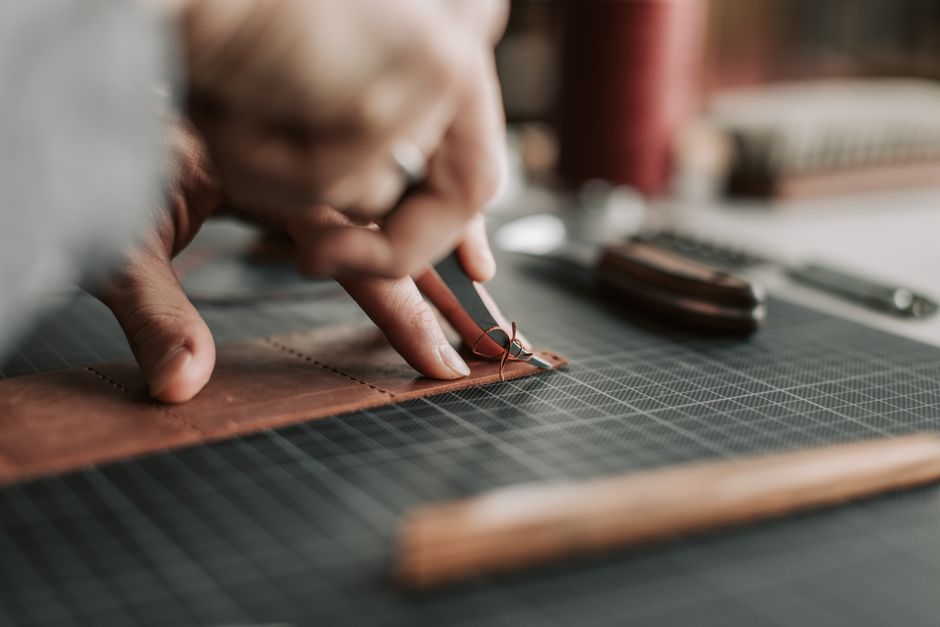
What emerges is a measurable difference: Italian-made leather ages with character. Seams hold because they're built to distribute stress. Dyes penetrate fabric rather than coat it.
Material Selection as Philosophy
Italian craftspeople treat material choice as non-negotiable. Tanneries in Tuscany source hides based on age and fat content, not price. Wool mills in Biella select fleece varieties for fiber length and resilience.
This approach costs more upfront. The payoff arrives over years—a leather belt that softens but doesn't crack, a wool coat that sheds pills but maintains structure. Giannibinico exemplifies this material-first thinking, sourcing fabrics from mills that have operated for decades.
The economics of this method mirror pre-industrial production: fewer units made per day, higher cost per unit, longer useful lifespan per garment.
Core Principles of Italian Making
Where Regional Tradition Meets Global Demand
Italian craft regions face a paradox in 2026. Demand for artisanal goods is high; labor costs and material sourcing are not.
Some workshops have responded by automating portions of production—cutting, grading, initial assembly—while preserving hand-finishing steps. Others remain entirely manual, pricing their output for collectors rather than mass markets.
Bespoke tailoring represents one survival model: made-to-measure garments justify the time investment because the customer has chosen to absorb the cost.
The real cost of cheap goods is paid in replacement. Italian craft asks you to pay once, well.
—Observation from Italian craft heritage documentation
Durability as Competitive Advantage
Italian-made goods rarely enter landfills after one season. Leather can be resoled. Seams can be restitched. Fabric can be rewoven if damaged.
This repairability is intentional. Workshops design products for a 10-year lifespan, not a 10-month one. Thread weight, seam allowance, and hem depth reflect that math.
From an environmental standpoint, a garment worn for a decade trumps five replacements. From an economic standpoint, Italian pricing accounts for this extended use—it's not a premium; it's deferred replacement cost.
The Craft That Outlasts Trend
Italian craftsmanship isn't a marketing phrase. It describes a production philosophy where the maker's name and reputation carry real weight.
In a year when fast fashion cycles faster than ever, this tradition reads as almost contrarian—a deliberate choice to slow down, to invest in materials, and to build things meant to last.